

-thumb.jpg?alt=media&token=019ab49d-cca3-4bdb-8a93-66154585a302)





-thumb.jpg?alt=media&token=2fa77185-d873-44af-a7bc-8588b27df90d)
-thumb.jpg?alt=media&token=4dd96fc0-d8a5-4086-b0ca-14dd2b09e1f3)
-thumb.jpg?alt=media&token=bcb59ea6-9b87-4e01-9a98-f705987284fb)






-thumb.jpg?alt=media&token=7b3dc456-4925-4fcf-90ad-c243d63d6a49)
-thumb.jpg?alt=media&token=e620fc70-1a18-4b72-804a-7f724e0c0718)
-thumb.jpg?alt=media&token=d5a9cb15-4c9d-48bf-b0e5-f3f823500085)


-thumb.jpg?alt=media&token=2329b1e6-56e6-4e9f-b3b3-d3c12545db8d)




Nadya-Sayapina-thumb.jpg?alt=media&token=e94e657b-26eb-489a-a0af-0a00c0802051)
Nadya-Sayapina-thumb.jpg?alt=media&token=fd3bbb94-f50f-408e-a425-21657b52e525)
Nadya-Sayapina-thumb.jpg?alt=media&token=b2467938-59d3-460e-a3f3-44b29b4a7203)
Sasha-Velichko-(1)-thumb.jpg?alt=media&token=3b54d209-652b-4ce2-95dc-bfe893ee43d0)












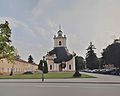
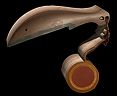



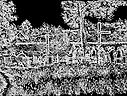
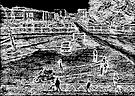













-thumb.jpg?alt=media&token=979bfd69-5e7b-4e4d-b546-ac3571eaeba5)








-thumb.jpg?alt=media&token=634cf4f7-88bb-408d-9f31-5ed1222cca49)
-thumb.jpg?alt=media&token=8ee334ef-ec53-4788-8dc3-be7a55833ab4)




https://youtu.be/fJ0hw5T0xdc?si=wY8llAWXIJz-waV3
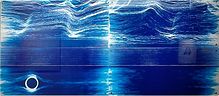
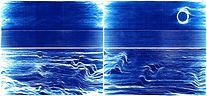
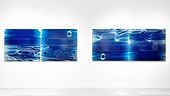
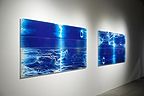
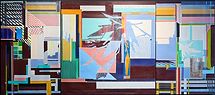
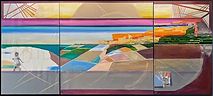
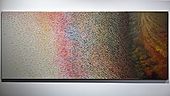
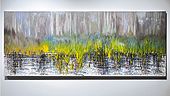
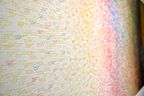
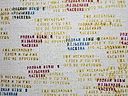
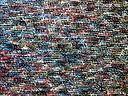
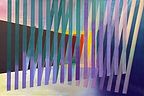
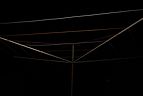
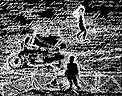
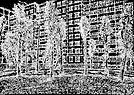
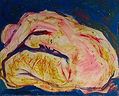
Architecture and space are two concepts that transform and organize the spatial environment in which we find ourselves. The problem of organization persists in three canvases measuring 160 by 120.
By working with a two-dimensional plane, the artist discovers a three-dimensional information space that exists and is interconnected with the space of our consciousness. By receiving information from the larger space and transferring it to the smaller, we accomplish a Transit of Thought, a Transit of Information. The method of receiving information (left side) is reverse perspective directed toward Us.
The method of giving information (right part) is information coming from Us.
Each of us is both the Architecture of our inner space and the Architect who creates this unique masterpiece. The space in which we find ourselves, the environment in which we immerse ourselves, and the consciousness that feeds us information—this is the plane of our canvas. There is a distance from the viewer to the plane of the canvas, but there also exists an esoteric space beyond the plane of the canvas. There is depth, height, and width in the unknown, yet shaping space. The boundary of these limits is the information square, transforming vertical concepts into horizontal concepts emanating from us and flowing into us (from large to small and from small to large). This is a constant process of transit from the unknown to fulfillment and awareness and back, from conscious (consciousness that has become larger) to transmission to another space. This is a process of mutual enrichment.
At first glance, the central part appears to be a two-dimensional plane, and this would be true, without the most important, smallest, and largest (meaningfully) point—the dot in the center of the square. This is the "Punсtum saliens" ("Quivering Point"), which can appear and disappear, can emit information and can receive information. It can be present and absent, can be visible and invisible, but the law of its existence (presence) will always operate—it is the foundation of the architecture that we are, the basis of the space that lives within us.
The information in "Architecture of Space" can be received (read) from both left to right and right to left. These are the visible movements of our consciousness. But there is also communication (transition) between the past and the present, the present and the future, the departed and the arrived. The known and the unknown. The depth of these concepts is preserved in the plane of the triptych "Architecture of Space