











Sasha-Velichko-(1)-thumb.jpg?alt=media&token=53e8f1c7-85c7-41a9-bce4-f1cd3dd6d28c)



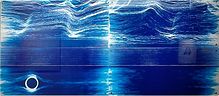
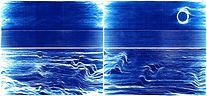
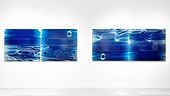
"The concept of the diptych is based on the image of water, sky and sun, as well as on the process of the cycle of states of nature. These images in the works become a metaphor for time and the eternal cycle of events on earth, the cyclical nature of what is happening.
The association between time and water is a very long-standing one—after all, the connection between the movement of water and the passage of time was first recognized in ancient times. Then, millennia ago, devices were invented that brought some order to everyday life, created conditions for planning, and perhaps slightly nudged humanity toward the realization that time is the most valuable asset and the most important thing for any living being.
Time is one of the most mysterious and philosophical concepts we encounter every day. Regardless of our attitude toward time, its elusiveness and influence on our lives cannot be denied. The most curious thing is that time can be compared to the elements of nature, especially water—it is always in motion.
According to philosophy, the original analogy between time and water lies in their impermanence and mutability. Water flows and changes its form across time and space. Similarly, time flows and seems endless, yet we see only a small part of it—that which has passed—and strive to understand what will happen in the future. We are constantly confronted with the flow of time, its form and limits, and each of us strolls along the shores of time, attempting to capture every moment of our lives.
Like a river, time can create new currents and directions in our lives. However, time is impossible to control, just as it's impossible to stop water in its tracks. We can only learn to go with the flow, adapt to its changes, and use it to our advantage.
The philosophy of time allows us to reflect on our lives and our interactions with time. Perhaps if we learn to perceive and use time like water, we can find balance and harmony within it, extracting maximum benefit and pleasure from our existence.
- 2025
- 2024
- 2023
- 2022
- 2021
- 2020
- 2019
- 2018
- 2017
- 2016
- 2015
- 2014
- 2013
- 2012
- 2011
- 2010
- 2009
- 2008
- 2007
- 2004
- 2003
- 2002
- 2001
- 2000
- 1999
- 1998
- 1997
- 1996
- 1995
- 1994
- 1993
- 1992
- 1991
- 1990
- 1989
- 1988
- 1987
- 1985
- 1984
- 1982
- 1971
2025
2024
2023
2022
2021
2020
2019
2018
2017
2016
2015
2014
2013
2012
2011
2010
2009
2008
2007
2004
2003
2002
2001
2000
1999
1998
1997
1996
1995
1994
1993
1992
1991
1990
1989
1988
1987
1985
1984
1982
1971
eng Translation Pending Review
Dialogue
2025
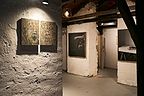
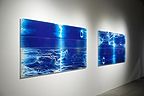
Author's technique: cameraless photogram imaging, cyanotype technique, printing on glass.2 works 120×270 cm (the diptych consists of two works, each work consists of 4 parts 60×135 cm)
Selected events
- Анна Мельниковаauthor